
The Lean Shop Floor Yellow Belt Series are designed and developed in a very simple way so that the shop floor staff with little or no formal education can understand.
There are 8 modules namely:
1. Apply Lean Practices
2. Apply 5S Pinnciples
3. Undertake Root Cause Analysis
4. Apply Cost Factors
5. Apply Quick Changeovers
6. Apply JIT Principles
7. Apply TPM Principles
8. Sustain Process Improvements
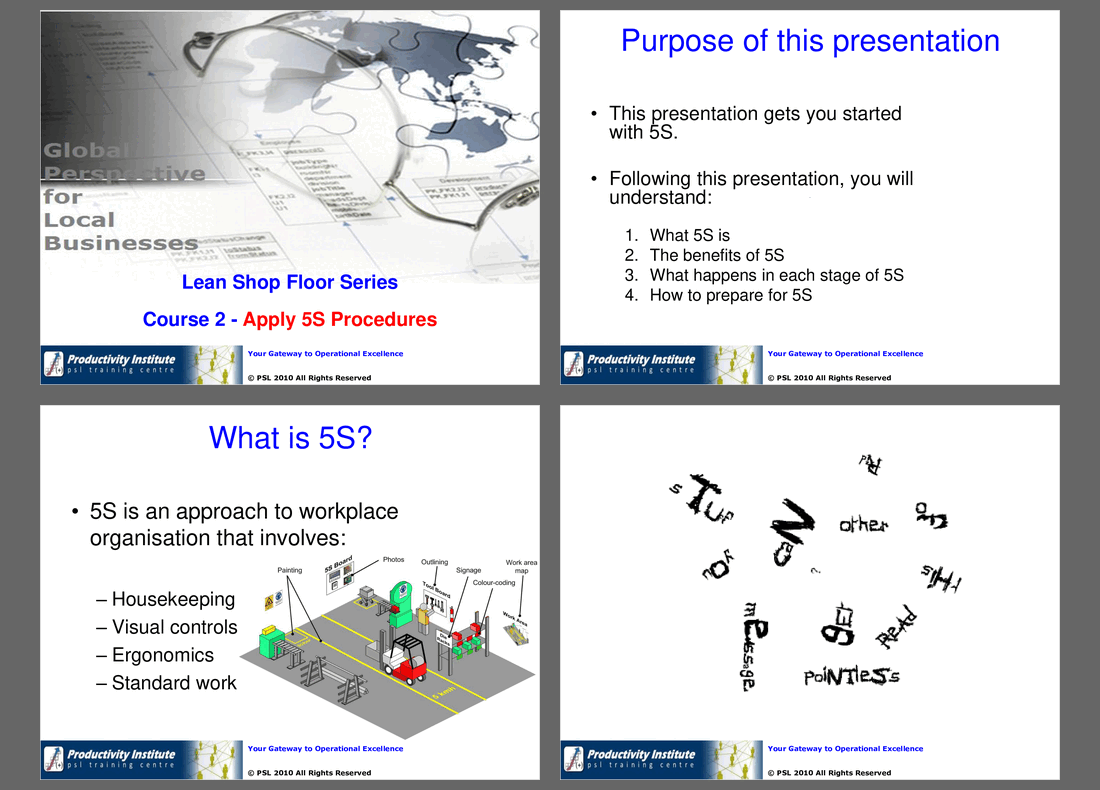
This module Apply 5S Principles covers the following:
What 5S is
The benefits of 5S
What happens in each stage of 5S
How to prepare for 5S
Understand the benefits of ?Sorting?
Identify ?essential? and ?non-essential? items
Set up a ?red tag? area
Conduct a ?red tag? activity
Monitor your progress
Understand the benefits of ?Setting in Order?
Understand workflow and ergonomics
Understand ?visual controls?
Improve your work area by ?Setting it in Order?
Understand what ?Shining? is
Understand the benefits of ?Shining?
Be able to undertake initial cleaning
Be able to undertake regular cleaning and inspection
Be able to keep records and monitor your progress
Understand what ?Standardising? is
Understand the benefits of ?Standardising?
Take responsibility for 5S
Make 5S part of standard procedures
Audit 5S
Understand the benefits of ?Sustaining?
Identify methods for Sustaining
Monitor your 5S progress
• Group activities included.
• Total number of slides = 80
You can also buy all the 8 modules at a discounted price. Pl look for "Shop Floor Series – All in 1"
This presentation also includes practical exercises to reinforce learning and ensure participants can apply 5S principles effectively. Real-world examples and visual aids are used to illustrate key concepts, making it easier for your team to grasp and implement 5S in their daily routines. The module emphasizes continuous improvement and accountability, ensuring that 5S becomes an integral part of your operational culture. This hands-on approach will drive efficiency and productivity on your shop floor, leading to tangible business results.
Got a question about the product? Email us at support@flevy.com or ask the author directly by using the "Ask the Author a Question" form. If you cannot view the preview above this document description, go here to view the large preview instead.
Executive Summary
The "Lean Shop Floor YB Series - 2. Apply 5S Principles" presentation is a comprehensive guide designed to introduce and implement the 5S methodology in workplace environments. Developed by a Lean expert and certified LSS Master Black Belt, this presentation equips corporate executives, integration leaders, and consultants with the knowledge to enhance workplace organization through Sort, Set in Order, Shine, Standardize, and Sustain. Participants will learn the benefits and practical applications of 5S, enabling them to foster a culture of continuous improvement and operational excellence.
Who This Is For and When to Use
• Corporate executives looking to improve operational efficiency
• Integration leaders managing workplace transformations
• Consultants advising on Lean methodologies
• Shop floor staff involved in daily operations
Best-fit moments to use this deck:
• During Lean training sessions for new employees
• As part of a workplace organization initiative
• When implementing continuous improvement programs
• For workshops focused on enhancing safety and productivity
Learning Objectives
• Define the 5S methodology and its significance in workplace organization
• Build a structured approach to implementing each stage of 5S
• Establish visual controls and ergonomic improvements in the workplace
• Identify essential versus non-essential items in the work area
• Develop a plan for sustaining 5S practices over time
• Monitor progress and continuously improve workplace organization
Table of Contents
• Introduction to 5S (page 3)
• Benefits of 5S (page 5)
• Stages of 5S (page 7)
• Preparing for 5S (page 10)
• Implementing Sort (page 12)
• Implementing Set in Order (page 15)
• Implementing Shine (page 18)
• Implementing Standardize (page 21)
• Implementing Sustain (page 24)
• Management’s Role in 5S (page 27)
• Continuous Improvement (page 30)
Primary Topics Covered
• 5S Definition - 5S is a systematic approach to workplace organization that enhances efficiency and safety through 5 key stages: Sort, Set in Order, Shine, Standardize, and Sustain.
• Benefits of 5S - Implementing 5S leads to improved visual communication, enhanced safety, increased productivity, and better morale among employees.
• Sort - The first stage involves removing unnecessary items from the workspace to create a clutter-free environment.
• Set in Order - This stage focuses on organizing tools and materials for easy access and efficient workflow.
• Shine - Regular cleaning and inspection of the workspace ensure that it remains safe and productive.
• Standardize - Establishing standard operating procedures locks in the gains made from the first 3 stages, ensuring consistency in practices.
• Sustain - This final stage emphasizes the importance of maintaining 5S practices through discipline and continuous improvement efforts.
Deliverables, Templates, and Tools
• 5S project board template for tracking implementation
• Red tag area setup guide for sorting non-essential items
• Cleaning schedule template for regular maintenance
• Visual control methods checklist for effective organization
• Standard operating procedures (SOPs) for each 5S stage
• Progress monitoring tools to evaluate 5S effectiveness
Slide Highlights
• Overview of the 5S methodology with visual aids illustrating each stage
• Before-and-after comparisons showcasing the impact of 5S on workspace organization
• Examples of visual controls and ergonomic improvements
• Step-by-step guides for implementing each stage of 5S
• Discussion prompts to engage participants in applying 5S principles
Potential Workshop Agenda
Introduction to 5S (30 minutes)
• Overview of 5S principles and benefits
• Discussion on the importance of workplace organization
Implementing Sort and Set in Order (60 minutes)
• Hands-on sorting activity with red tagging
• Group exercise on organizing tools and materials
Shine and Standardize (45 minutes)
• Initial cleaning demonstration and regular inspection practices
• Development of standard operating procedures
Sustain and Continuous Improvement (30 minutes)
• Strategies for maintaining 5S practices
• Setting up a continuous improvement plan
Customization Guidance
• Tailor the presentation to specific industry needs (manufacturing, healthcare, etc.)
• Adjust examples and case studies to reflect the organization’s context
• Incorporate company-specific terminology and metrics for relevance
• Modify the workshop agenda based on participant experience levels
Secondary Topics Covered
• Visual controls and their role in workplace organization
• Ergonomics and its impact on employee productivity
• The importance of management commitment in sustaining 5S practices
• Techniques for fostering a culture of continuous improvement
FAQ
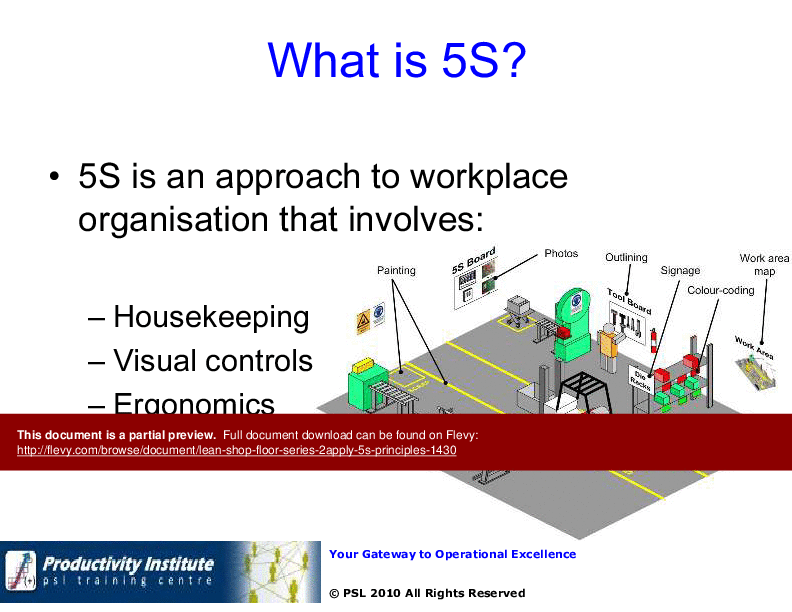
What is 5S?
5S is a Lean methodology focused on workplace organization and efficiency through 5 stages: Sort, Set in Order, Shine, Standardize, and Sustain.
What are the benefits of implementing 5S?
The benefits include improved safety, enhanced productivity, better morale, and more efficient use of space, leading to overall operational excellence.
How do I prepare for a 5S implementation?
Preparation involves setting up a project board, defining the 5S area boundaries, gathering resources, and conducting an initial audit.
What is a red tag area?
A red tag area is a designated space for storing non-essential items while they are evaluated for necessity in the workspace.
How can I ensure 5S practices are sustained?
Sustaining 5S requires discipline, regular audits, management support, and continuous improvement initiatives to prevent reverting to old habits.
What role does management play in 5S?
Management must support the 5S program by providing resources, encouraging participation, and recognizing efforts to maintain standards.
How often should cleaning and inspection occur?
Cleaning and inspection schedules should be established based on the specific needs of the workspace and should be displayed prominently.
What tools can help monitor 5S progress?
Tools such as progress tracking sheets, audit forms, and visual control boards can help monitor and report on 5S implementation effectiveness.
Glossary
• 5S - A Lean methodology for workplace organization consisting of Sort, Set in Order, Shine, Standardize, and Sustain.
• Red Tag - A label used to identify non-essential items during the sorting process.
• Visual Controls - Tools that provide immediate visibility of the status of work and organization.
• Ergonomics - The study of designing equipment and procedures to improve safety and efficiency in the workplace.
• Standard Operating Procedures (SOPs) - Established guidelines that dictate how tasks should be performed consistently.
• Continuous Improvement - Ongoing efforts to enhance products, services, or processes through incremental improvements.
• Workspace Audit - An assessment of the current state of the workspace to identify areas for improvement.
• Cleaning Schedule - A plan that outlines what needs to be cleaned, who is responsible, and how often cleaning should occur.
• Management Commitment - The active support and involvement of leadership in implementing and sustaining 5S practices.

• Clutter - Unnecessary items that occupy space and hinder efficiency in the workplace.
• Workflow - The sequence of processes through which a piece of work passes from initiation to completion.
• Shadow Board - A visual control tool that outlines the location of tools and equipment to improve organization.
• Initial Cleaning - The first thorough cleaning of a workspace to establish a baseline for maintenance.
• Regular Inspection - Ongoing checks to ensure cleanliness and functionality of the workspace.
• KPI - Key Performance Indicator, a measurable value that demonstrates how effectively a company is achieving key business objectives.
• Participative Work Teams - Groups of employees who collaborate to implement and sustain 5S practices.
• Top-Level Management - Senior executives responsible for providing direction and resources for 5S initiatives.
• Work Area Boundaries - Defined limits of the area subject to 5S implementation.
• Blitz Cleaning - An intensive cleaning effort aimed at achieving a high standard of cleanliness in a short period.
• Sustaining - The ongoing effort to maintain the improvements achieved through the 5S process.
Source: Best Practices in Visual Workplace, Shop Floor PowerPoint Slides: Lean Shop Floor YB Series - 2. Apply 5S Principles PowerPoint (PPT) Presentation Slide Deck, OpEx Academy NZ
This document is available as part of the following discounted bundle(s):
Save %!
Lean Shop Floor / Yellow Belt Training Series - 8 Modules
This bundle contains 8 total documents. See all the documents to the right.
|
Receive our FREE presentation on Operational Excellence
This 50-slide presentation provides a high-level introduction to the 4 Building Blocks of Operational Excellence. Achieving OpEx requires the implementation of a Business Execution System that integrates these 4 building blocks. |